

Lydia T.
College vs. Non-College Careers: Is Pilot Training Right?
Choosing between college and a non-college career path can feel like choosing which doors will stay open for the rest of your life. Aviation offers three main routes: begin flight training first, earn a degree while training, or complete flight training and optionally add college later.
The short answer is that you do not need a college degree to begin flight training or earn FAA pilot certificates. A degree can still matter for certain employers and for specific restricted Airline Transport Pilot pathways. The right choice depends on the flying job you want, how you learn, your schedule, and the full cost of each route.
At Vegas Aviation, we help students connect those decisions to a practical flight training path in Las Vegas that fits their career target and current commitments.
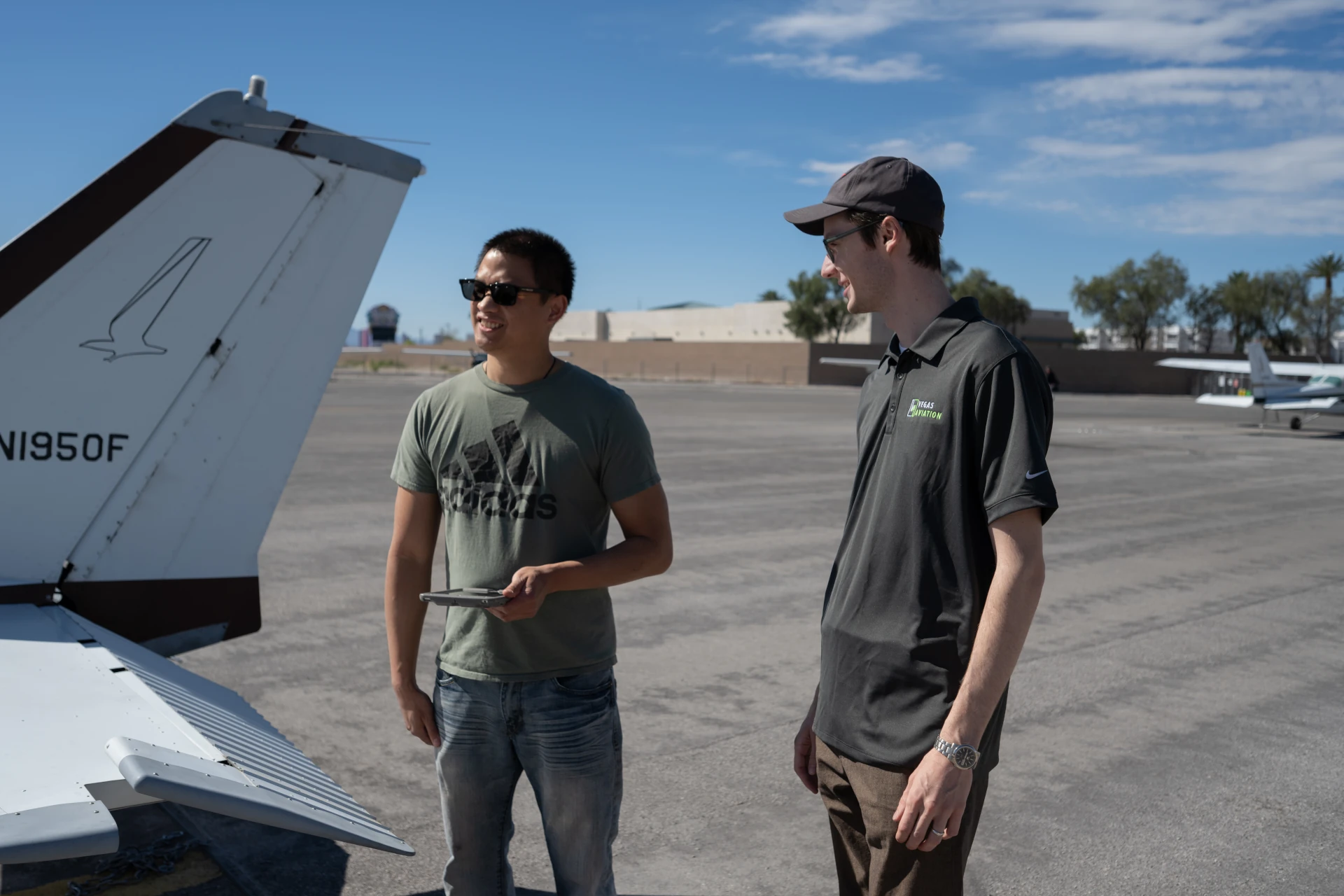
A flight instructor helps a student turn a career idea into a practical training plan.
Pilot Training Gives the Non-College Path Real Structure
The flight-school-first route still requires substantial education. Pilot training is a specialized credential path built around aeronautical knowledge, flight experience, instructor endorsements, proficiency, written tests, and practical tests.
The FAA separates pilot certification from college enrollment. You can begin lessons before receiving a student pilot certificate, and certification rules focus on eligibility, knowledge, experience, and skill. The FAA’s Become a Pilot page explains the starting requirements.
For many new students, the first full credential is the Private Pilot Certificate. A career-minded student may then add an Instrument Rating, a Commercial Pilot Certificate, instructor qualifications, and multi-engine experience. Each stage has its own requirements and purpose.
The flight-school-first route demands study, judgment, consistent practice, medical eligibility when applicable, and demonstrated proficiency in the aircraft. It is a different educational structure, rather than a shortcut.
Compare Three Pilot Education Routes Side by Side
A useful comparison asks which credentials you will build, in what order, and around which life commitments.
| Route | What you build first | When it may fit | Main tradeoff to plan for |
|---|---|---|---|
| Flight-training-first | Private Pilot Certificate and later career-track flight training | You want early cockpit experience, flexible scheduling, or a direct test of whether flying suits you | You must research employer education preferences separately from FAA requirements |
| College-first | Academic credits and a degree before or alongside hands-on training | You want a traditional campus experience, a broader academic foundation, or a degree relevant to another career option | Flight experience may develop later unless training is built into the program |
| Combined aviation degree and flight training | Academic coursework and pilot qualifications on parallel tracks | You want to keep flying momentum while working toward an aviation degree | You must coordinate schedules, funding, transfer-credit rules, and the exact program structure |
We offer a flexible Part 61 flight training environment for students balancing work, school, family, or a career change. Flexibility is most valuable when it comes with a steady lesson schedule and a realistic study plan.
Combine an Aviation Degree with Flight Training
Some students picture college as four years away from the cockpit. It does not have to work that way. Flight training and aviation coursework can happen during the same season of your life when the school and degree program support concurrent enrollment.
Through our aviation education resources, students can explore degree pathways connected to flight training. Purdue Global offers online aviation degrees, including Professional Flight and Aviation Management, and its professional flight program allows qualifying students to complete required pilot credentials through approved flight-school partners while enrolled. Eligible FAA certificates and ratings may also be evaluated for transfer credit under current program rules. Purdue Global explains the broader model on their online aviation degrees page.
That can create a practical weekly rhythm: fly when aircraft, instructor, and weather align; complete online coursework around the training calendar; and keep both records moving forward. Our Purdue Global partnership overview shows an education path for you to explore.
Transfer credit, tuition, admission requirements, and completion time can change by program and student. Build your plan from the current rules that apply to you, not from an old credit total or a best-case timeline.
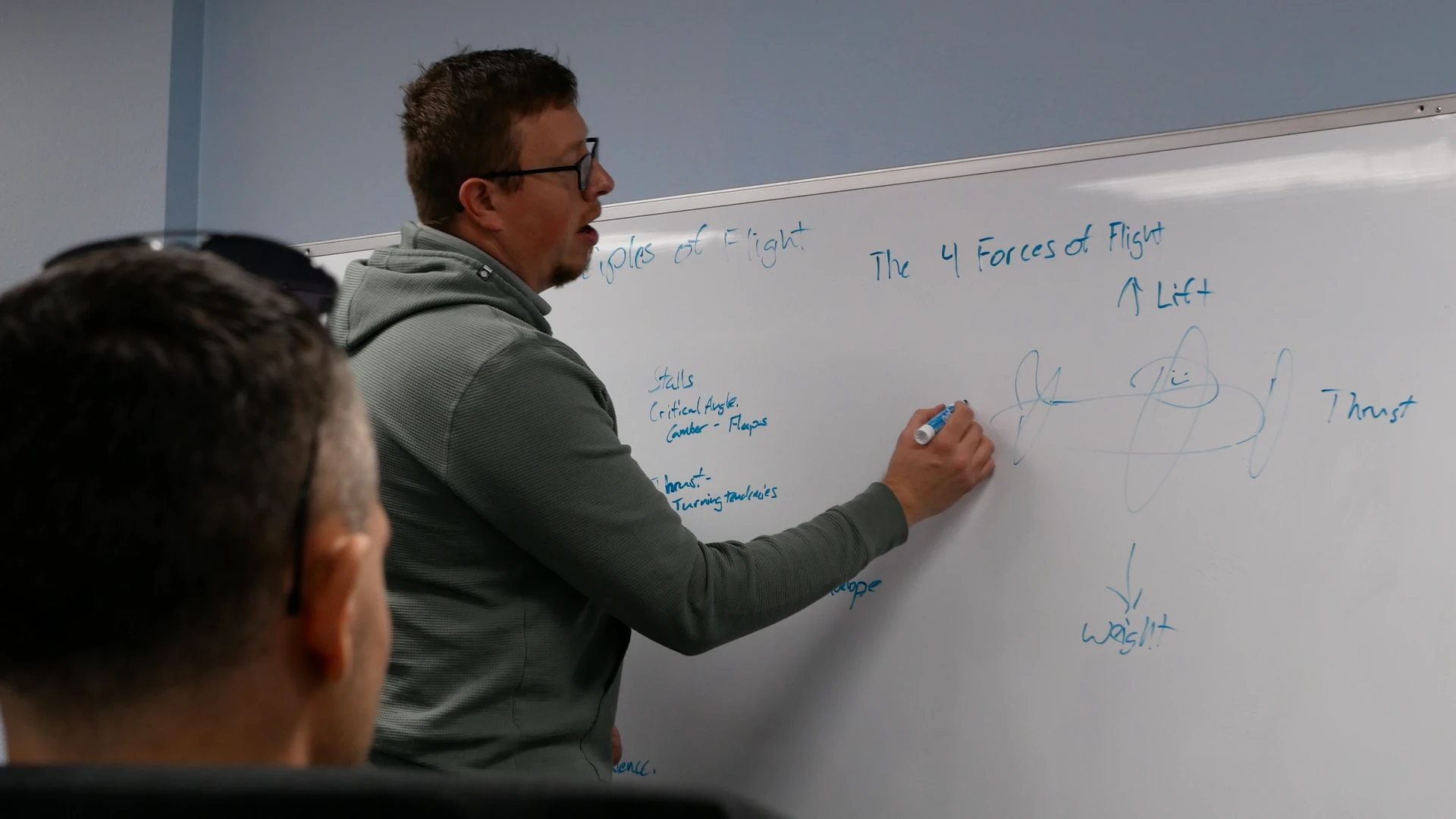
Ground instruction and college coursework can complement the decisions a student practices in the cockpit.
Let the Job You Want Decide How Much College Matters
Start with the destination. FAA certification requirements and employer hiring standards are separate questions. You can meet the requirements for a pilot certificate without a bachelor’s degree and still encounter an employer that requires or prefers one.
The U.S. Bureau of Labor Statistics says airline pilots typically need a bachelor’s degree, while commercial pilots typically need flight training and may face employer-specific degree preferences. Its airline and commercial pilot career profile is a useful national reference, but a target employer’s current job posting is the better final check.
Use your target role to frame the decision:
- Airline track
FAA pilot certification does not include a degree requirement. A degree may still strengthen your options or satisfy an employer’s education standard. Compare it alongside the complete professional pilot training path. - Flight instruction or other commercial flying
The relevant certificates, ratings, experience, medical qualification, and employer standards drive eligibility. A degree may help, but it does not replace flight qualifications. - Aviation management or leadership
An aviation or business degree may support work beyond the cockpit. Our education partnerships include both professional flight and aviation management directions. - Personal or recreational flying
Your college major does not determine whether you can pursue a Private Pilot Certificate.
No route guarantees a job. Certificates and ratings build qualifications; hiring also depends on experience, medical status, interview performance, background requirements, employer needs, and the positions available when you apply.
Treat Restricted ATP Benefits as Program-Specific
An aviation degree can affect the path to a restricted Airline Transport Pilot certificate, commonly called an R-ATP, but only under specific conditions. The FAA authorizes certain higher-education institutions to certify qualifying graduates of specific aviation degree programs for reduced aeronautical-experience eligibility.
Not every aviation degree qualifies. Not every set of flight lessons qualifies. The exact degree, aviation coursework, associated training, certificates, ratings, institutional authorization, and other requirements must line up with federal rules. The FAA maintains current guidance and its authorized-institution list on the Pilot Training and ATP page.
If R-ATP eligibility is central to your career plan, verify the exact pathway before enrolling or transferring training records. Our team can help you organize the flight-training side of the conversation, and our education resources can point you toward the current academic program details.
Compare the Full Cost of Each Route
A useful comparison includes both the total investment and the time before you may qualify for paid work. A flight-school-first route removes degree tuition from the immediate plan while retaining the full cost of pilot training. A combined route adds academic expenses and may provide transfer-credit opportunities or other student resources.
The sequence of pilot credentials may create an earlier path to earnings when compared to the completion of a degree in another field. After gaining the certificates, ratings, and experience a position requires, some pilots move into paid roles such as flight instruction while continuing to build flight time. This can allow repayment of the training investment to begin before a traditional degree would be completed. Training pace, eligibility, hiring conditions, and available positions all affect that timeline, so use a conservative estimate for when aviation income could realistically begin.
With that timeline in mind, calculate what it will take to reach each employable stage. For flight training, include aircraft and instructor time, ground instruction, supplies, knowledge tests, examiner and checkride expenses, medical certification when applicable, and any additional instruction needed to reach proficiency. Weather, maintenance, lesson frequency, aircraft and instructor availability, and checkride scheduling can affect both cost and completion time.
Start with our flight training pricing, then add tuition, fees, and living expenses for each college option under consideration. Compare those totals with a realistic training schedule and projected employment timeline. Students can also review flight training financing resources and aviation scholarship resources. Financing may be available to qualified applicants; approval, interest, repayment terms, and total cost depend on the provider and applicant.

A realistic training plan connects lesson frequency, study time, and budget before the student heads to the aircraft.
Use This Fit Test Before You Choose a Route
The right path should fit your target career and the way you can realistically train. Answer these questions before comparing school names or promotional promises:
- What job am I working toward?
Write down the exact role, then review current FAA qualifications and employer education preferences. Use our pilot career guide to map the common training sequence. - Why do I want the degree?
It may support airline applications, management ambitions, a backup career, or personal development. Write down the benefits that apply to your plans, then compare them with the cost and time required. - Can I train consistently?
A flexible schedule still needs frequency. Long gaps can require review and slow momentum. See how Part 61 training works before choosing a pace. - Can I fund the whole route?
Compare flight costs, academic costs, living expenses, financing terms, and the income you may give up while training. Our pricing resources give you a starting point for the flight side. - Have I tested the cockpit experience?
A career idea becomes much clearer after a discovery flight, when you can experience the aircraft, meet the team, and talk through the training path.
If your answers point in different directions, a combined plan may serve you better than choosing college or flight training in isolation.
College and Pilot Training Questions
Do you need a college degree to become a pilot?
You do not need a college degree to begin training or earn FAA pilot certificates. Employers can set separate education requirements, and many airline pilots hold bachelor’s degrees. Start by comparing the qualifications in our flight training programs with current postings for the jobs you want.
Can you attend college and complete pilot training at the same time?
Yes. Some programs combine online or campus coursework with training at a flight-school partner. Vegas Aviation students can explore concurrent pathways through our aviation education partnerships. Admission, transfer credit, and scheduling depend on the specific degree program.
Is an aviation degree better than a non-aviation degree for pilots?
It depends on your career plan. An aviation degree can align closely with flight operations and may matter for a qualifying R-ATP pathway. A non-aviation degree can provide a broader backup specialty while still meeting an employer’s bachelor’s-degree preference. The FAA pilot certificate remains a separate credential from either degree choice. Review the career training sequence alongside your academic priorities.
Does every aviation degree reduce ATP flight-hour requirements?
No. Reduced-experience R-ATP eligibility applies only to qualifying graduates who meet the requirements of an FAA-authorized pathway. Confirm the current institution, degree, coursework, associated flight training, and certificate requirements before relying on that benefit. Our education resource page is a good starting point for the academic conversation.
What pilot training comes first for a new student?
For most, the first full certificate is the Private Pilot Certificate. You can take lessons before holding a student pilot certificate, but you need the appropriate certificate and instructor endorsements before solo flight.
Can you finance pilot training without enrolling in college?
Flight-training financing options may be available outside a college degree program. Eligibility and terms vary, so compare the monthly payment with interest, fees, repayment timing, and the total amount repaid. Review our financing resources before building them into your plan.
What is the best first step if you are unsure?
Start with a discovery flight at Vegas Aviation. It gives you a real cockpit experience before you commit to a full training or degree plan.
Find Out Whether the Cockpit Belongs in Your Plan
You can test your interest in flying before settling the college question. One flight turns an abstract career comparison into firsthand experience you can evaluate.
Book your discovery flight at Vegas Aviation and take the controls with an instructor. After the flight, we can help you understand the next training step and how it could fit with work, college, or a combined aviation degree path.


